
RESEARCH ETHICS – WHAT DRIVES RESEARCHERS?
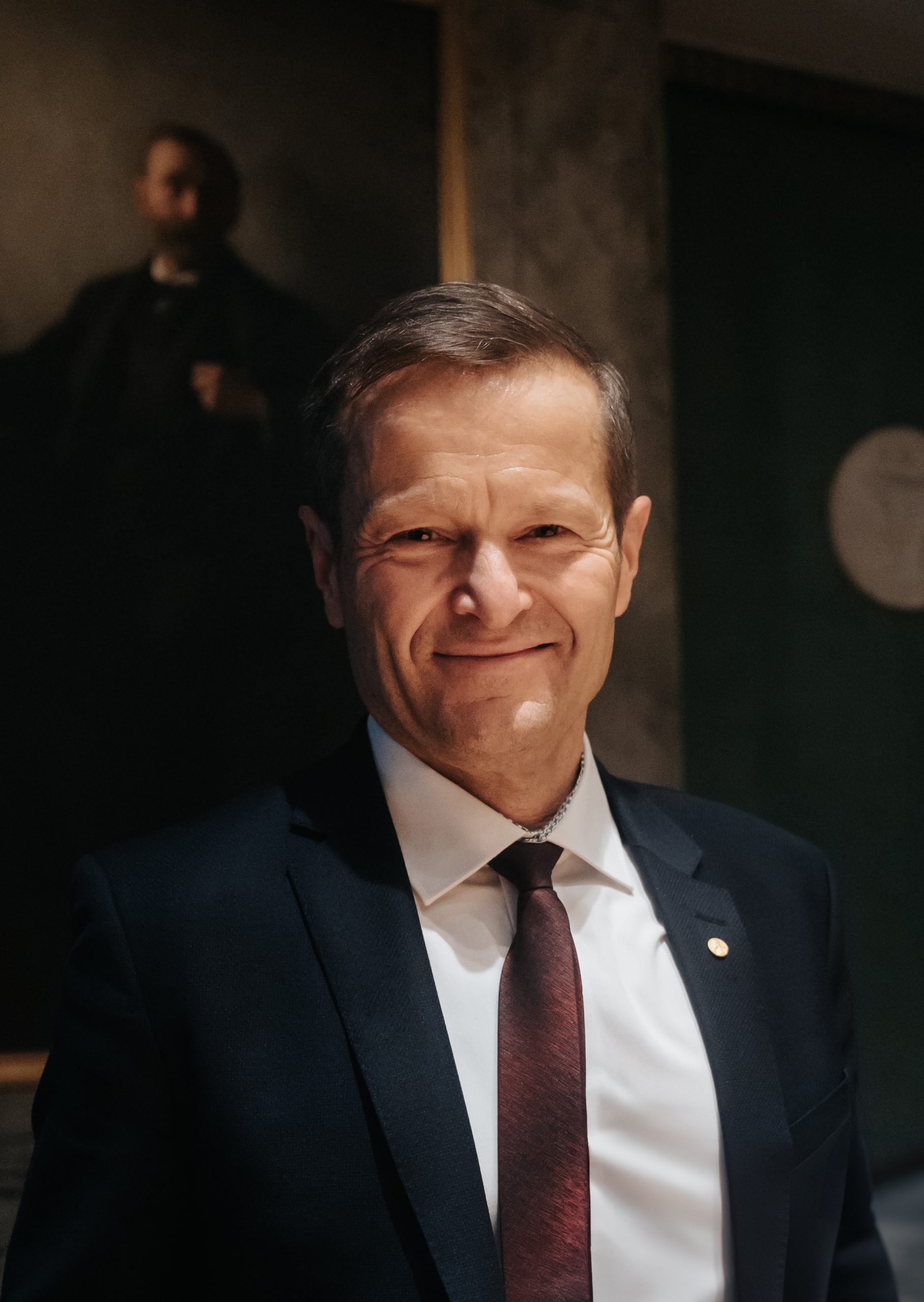
AN INTERVIEW WITH Prof. Dr Ferenc Krausz

RESEARCH ETHICS – WHAT DRIVES RESEARCHERS?
AN INTERVIEW WITH Prof. Dr Ferenc Krausz



Ferenc Krausz is a Director for Quantum Optics at the Max Planck Institute and a professor at Ludwig Maximilian University of Munich, as well as a Chair Professor in the Department of Physics at the University of Hong Kong (HKU). For the Nobel Laureate in Physics, curiosity is not an abstract concept, but a personal driving force. Even as a child, he wanted to understand how things work at their very core. Today, through his work on ultrashort laser pulses, he is pushing the boundaries of what can be measured – and is deliberately seeking new approaches where existing knowledge leads nowhere.
For him, progress arises where disciplines work together, and criticism is taken seriously. Research means making decisions, acknowledging obstacles and, when in doubt, correcting the course once taken. It requires careful validation, the responsible use of resources and clear communication with both the scientific community and the general public. Therefore, the following discussion is focused on attitude, perseverance, precision and the willingness to build up knowledge step by step, rather than on awards.
Professor Krausz, what motivates you to keep tackling new research questions whose outcomes are still unknown?
I am a curious person. Even as a child, I used to take old radios apart to explore what was inside them. Curiosity should be the driving force behind every researcher. As a researcher, you are always on the lookout for the next adventure in the vast universe of natural phenomena. For us, this means pushing back the frontiers of knowledge and venturing into uncharted territory. It really is an incredible feeling when, one day, you succeed in being the first to observe something that no human being has ever discovered before. There are still plenty of blank spots on the map of the natural sciences. The prospect of discovering something new and expanding humanity’s knowledge is a tremendous motivation for me
In your work, you combine various disciplines. Why is that important for good research?
If we did not challenge the boundaries of knowledge and push them further, we would be treading water. Our world is changing rapidly; there is hardly ever a standstill. Many challenges therefore require new ways of thinking and unconventional approaches. If, for example, we search for technical or medical solutions using only existing knowledge, we are unlikely to successfully overcome many of the challenges of the future. New measurement techniques in physics could potentially open up new avenues for the early detection of serious illnesses. To realise this potential, we need to bring different disciplines – in our case, physics, computer science and medicine – together to work in synergy.
When new approaches are discussed critically: how do you tell whether criticism helps you move forward or tends to hold you back?
Criticism is, first and foremost, something one should face up to, regardless of one’s position. I like to incorporate the different opinions from my team into the decision-making process. Criticism makes us question whether the new approach is actually as promising as it seemed at first glance, whether it can actually be implemented, or whether we have overlooked a potential ‘show-stopper’. Even if we resolve the criticism raised, we have learnt something in the process: how to pursue our goals together through critical dialogue. Such a dialogue usually also yields suggestions and ideas that one might not have thought of oneself, but which occasionally open up promising avenues. At some point, however, a decision must be made in order to move forward in a particular direction. I then have to live with that decision and, if necessary, correct it later.
Research builds trust – from funders, colleagues and the public. Where do you feel this responsibility in your day-to-day academic life?
Experimental research – in our discipline, ultrashort-pulse laser physics – costs money. We take great care to use the financial resources – which are, after all, generally provided by taxpayers – as efficiently as possible. Likewise, we feel obliged to validate our research as reliably as possible. This means we scrutinise our results meticulously before releasing them for publication. After all, the new knowledge we publish forms the basis for generating further knowledge for the common good. We also feel obliged, in addition to scientific publications aimed at the specialist community, to inform the general public in an appropriate manner. This is done via our photonworld.de website, through our press releases, and regularly through lectures aimed at the general public.
Have there been times when you have deliberately abandoned a promising idea? What was the deciding factor?
When one decides to put a promising idea into practice, one does so driven by the confidence that it can succeed, whilst remaining aware that unforeseen circumstances may hinder us and even cause the project to fail. The further we venture into uncharted territory, the greater the risk of suddenly facing a major obstacle. Whether the obstacle appears surmountable or insurmountable determines whether we continue or abandon the path. The longer one has followed the (wrong) path, the harder it is to accept failure. This has already happened a few times. Each time, I have tried to focus on the positive: valuable new insights can also be gained from failure. It forces us to make a fresh start, which offers a new opportunity. Perhaps for a path that leads to the goal faster.
Nowadays, research is often measured in terms of speed, visibility and applicability. In your opinion, what must not be lost in the process?
No matter how great the time pressure or how fast the pace, care must be taken to ensure that the validation and consolidation of research findings are not neglected. We bear an enormous responsibility in this regard. On the one hand, we have a responsibility towards the academic community and the scientific world, as they rely on these findings. They want to be confident that they are sufficiently substantiated. On the other hand, our responsibility towards the next generation of scientists is at least as great. They will learn from us how conscientiously one must proceed when evaluating and, if necessary, repeating experiments, in order to ensure that the conclusions drawn from the experiments and calculations are correct. Our young colleagues will shape the world of tomorrow. I am convinced that it is worth teaching the next generation to exercise the utmost care when carrying out experiments and calculations, studies and analyses, as well as when scrutinising, reproducing and validating research findings!
What qualities should young researchers possess if they wish to pursue serious science in the long term?
If you want to succeed in research, you have to stay on the ball and never give up. Admittedly, it can sometimes be discouraging when you fail to produce results for a long time, but it’s worth persevering. I have often had to face this experience in my own research career. Research today is not just about standing in the laboratory and producing knowledge. Working as a researcher also involves organising one’s own work efficiently and securing solid funding. Furthermore, communicating findings to the public is a crucial aspect. Science should be communicated so as not to lose public acceptance and to offer a degree of reliability, particularly in the age of fake news.
And as painful as this may sound right now: sometimes you have to do without personal comforts and spend nights in the laboratory, for example, if it helps in reaching a conclusion. I can assure you that I know what I’m talking about, and I would like to take this opportunity to thank my family in particular for always selflessly supporting me.