
PHILANTHROPY: A KEY PILLAR OF RESEARCH FUNDING
WHY PRIVATE FUNDING IS MORE THAN JUST A STOPGAP MEASURE
AUTHOR Ernst G. Wittmann

PHILANTHROPY:A KEY PILLAR OFRESEARCH FUNDING
WHY PRIVATE FUNDING IS MORE THAN JUST A STOPGAP MEASURE
AUTHOR Ernst G. Wittmann



When people talk about patronage and private funding of science, there is one word that
often comes to mind: gap. Private funding is seen as something that steps into place
when state funding is insufficient – a stopgap, a helpful but, fundamentally, secondary
supplement. This view is convenient for political discourse. But it is wrong. It is wrong
because it fails to recognise the structural autonomy of private funding for science. It is
important to be more precise here: patronage – the generous, risk-taking support of the
arts, science and culture by individuals – and institutionalised foundations are not the
same thing. Foundations are legally independent organisations with their own assets
and statute, whilst patronage is a form of behaviour – often based on personal interests.
The Wilhelm Sander Foundation is both: it embodies the spirit of patronage
(courageous, risk-taking, long-term oriented), but in the institutional form of a
foundation – which means that this ethos is not tied to any one individual, but remains
permanently enshrined.
And that is precisely the point: a foundation such as the Wilhelm Sander Foundation can
make a difference where the modern research state – with its evaluation and budgetary
constraints, project cycles and strategic prioritisation – reaches its structural limits: for
long-term questions without immediate practical application, for genuine risk in the
sense of ‘high risk–high reward’, for academic freedom where neither output nor
outcome can easily be measured.
This is where private funding finds its true purpose. As a deliberate counterpoint to
short-term management. An institutionalised foundation makes it possible to provide
funding precisely where the state reaches its structural limits – and thereby opens up
the scope needed for science to unleash its transformative power. The Nobel Laureate
and neuroscientist Prof. Dr Thomas Südhof, who worked at Stanford University for many
years, succinctly describes this difference:
The flexibility that a foundation can provide is an extremely important complement to a
far more bureaucratic method of state funding.
Die Flexibilität, die eine Stiftung bereiten kann, ist ein extrem wichtiges Komplement zu einer viel bürokratischeren staatlichen Finanzierungsmethode.
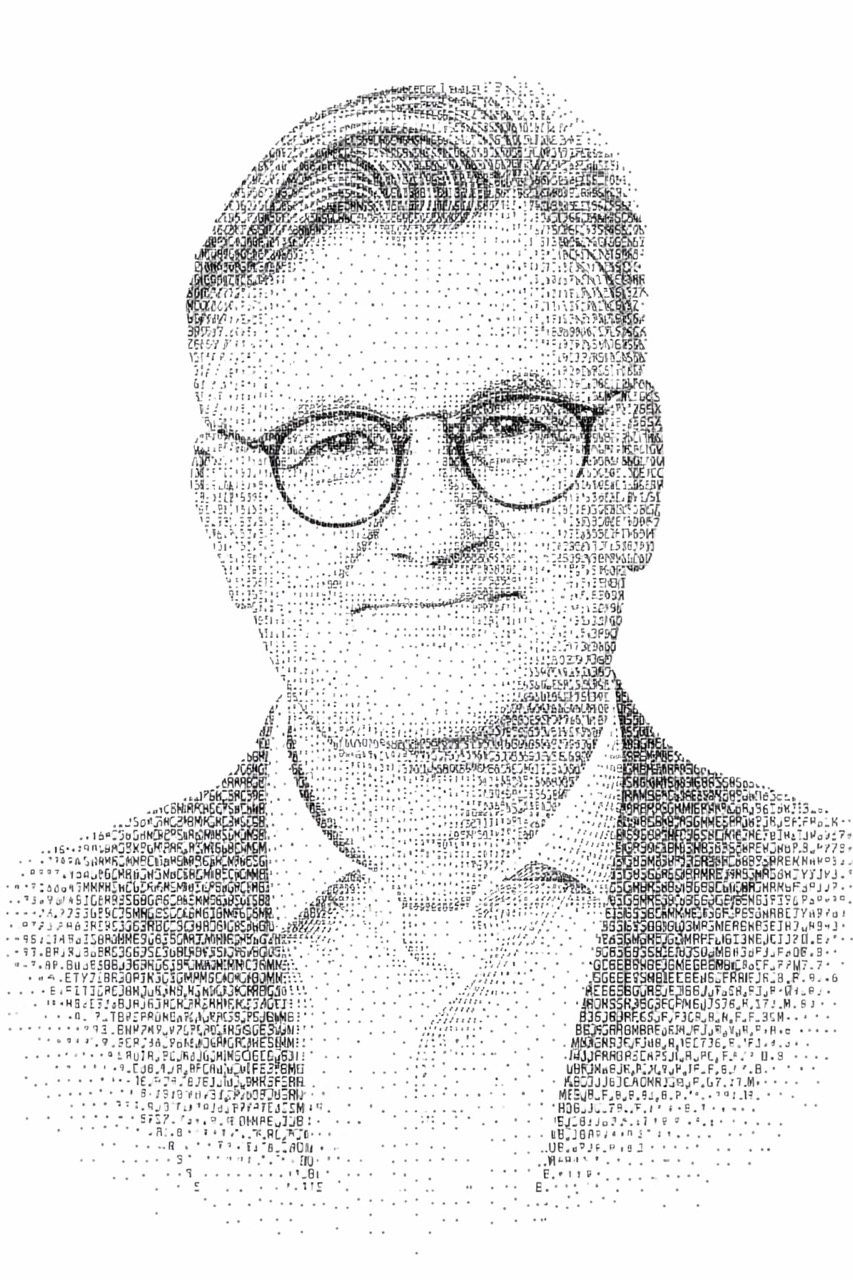
The sheer size of the gap compared to US research philanthropy is demonstrated by Prof. Dr Josef Puchta, former commercial director of the German Cancer Research Centre (DKFZ) and head of private research funding at the DKFZ in Heidelberg, with a specific figure:
The three to four relevant scientific competitors of the DKFZ on the US East Coast generate, in addition to their core funding, around 100 to 150 million dollars per year from private sources. We are a long way from that.
This flexibility is not a luxury, but a necessity – and it will become even more important in the future. While Germany has been able to rely on a strong public research system in the past, disturbing trends are emerging: in many countries, particularly in the USA, public research funding has been steadily reduced. What is already taking shape across the globe could soon apply to Germany as well. I am convinced that there will also be increased private funding in Germany, as public funds will be scaled back increasingly in future, as is already evident in the USA today. This is no reason for inaction, but rather a call for deliberate strategic preparation. The Wilhelm Sander Foundation put this insight into practice for decades: we support projects that sometimes take 15 or 20 years before they yield therapeutic results, and we dare to take on ventures whose success is not guaranteed. This is not the role of a ‘stopgap’ – that is the role of a responsible, independent player in the funding sector. Josef Puchta also warns against an overly narrow interpretation of private funding:
It would be short-sighted to attempt to raise private funds merely as a stopgap. Private fundingshould enable a research institution to build on existing strengths, to explore new fields and to nurture young talent. In this respect, private research funding is a strategic complement to, rather than a substitute for, public funding.

The German foundation model deliberately sets itself apart from certain approaches in US philanthropy. Whilst there, major donors and foundations are often the focus of attention – buildings bear their names, and visibility is high – German funding
foundations traditionally see themselves as discreet partners of the academic community, creating ‘islands of success’, without supplanting public responsibility. This modesty is not a weakness, but a strength: it enables long-term partnership on an equal footing, without private interests or reputation taking centre stage. Nevertheless, it is important to clearly articulate the significance of private foundations. Particularly for a country like Germany, with a traditionally strong public research
system, it is all too easy to make the mistake of viewing private funding as marginal. But as Thomas Südhof observes regarding the USA:
Without these foundations, without philanthropy in the USA, science would suffer greatly here.
Josef Puchta depicts a mechanism that is often underestimated: private funds can not only have a direct impact, but also serve as a lever to mobilise additional public funds. And with regard to the next generation of funding enthusiasts, the following applies:
The younger generation of supporters, in particular, attaches great importance to knowing what is being done with their support and how the funds are being used.

According to Josef Puchta, in addition to a state-led culture of accountability, there must also be a private culture of accountability for science and research – on which, in a country with few natural resources such as Germany, a large part of the future depends. This does not require private foundations to replace state research funding. On the contrary: foundations need a strong public sector in order to fulfil their function at all. They are a complement – but not in the sense of a stopgap, rather in the sense of a necessary plurality of funding approaches. Where the state steers policy in the short term and strategically, the foundation can work in the long term and in an exploratory manner. Where public funding is geared towards continuity and breadth, private funding can enable innovation and risk-taking. This complementarity is no coincidence; it is
systemic.
The science of the future needs this plurality: the strategic stability of the state as well as the freedom, willingness to take risks and long-term perspective that only institutionalised foundations with a philanthropic mindset can offer. Both together – not one instead of the other – constitute a strong research landscape. It is precisely in this role – as an independent, responsible player, not as a stopgap – that we hope, in the years to come, to retain the trust of the scientific community and society at large.