
What makes good research?
AN INTERVIEW WITH Prof. Dr Christine Engeland & Prof. Dr Florian Greten

What makes good research?
AN INTERVIEW WITH Prof. Dr Christine Engeland & Prof. Dr Florian Greten
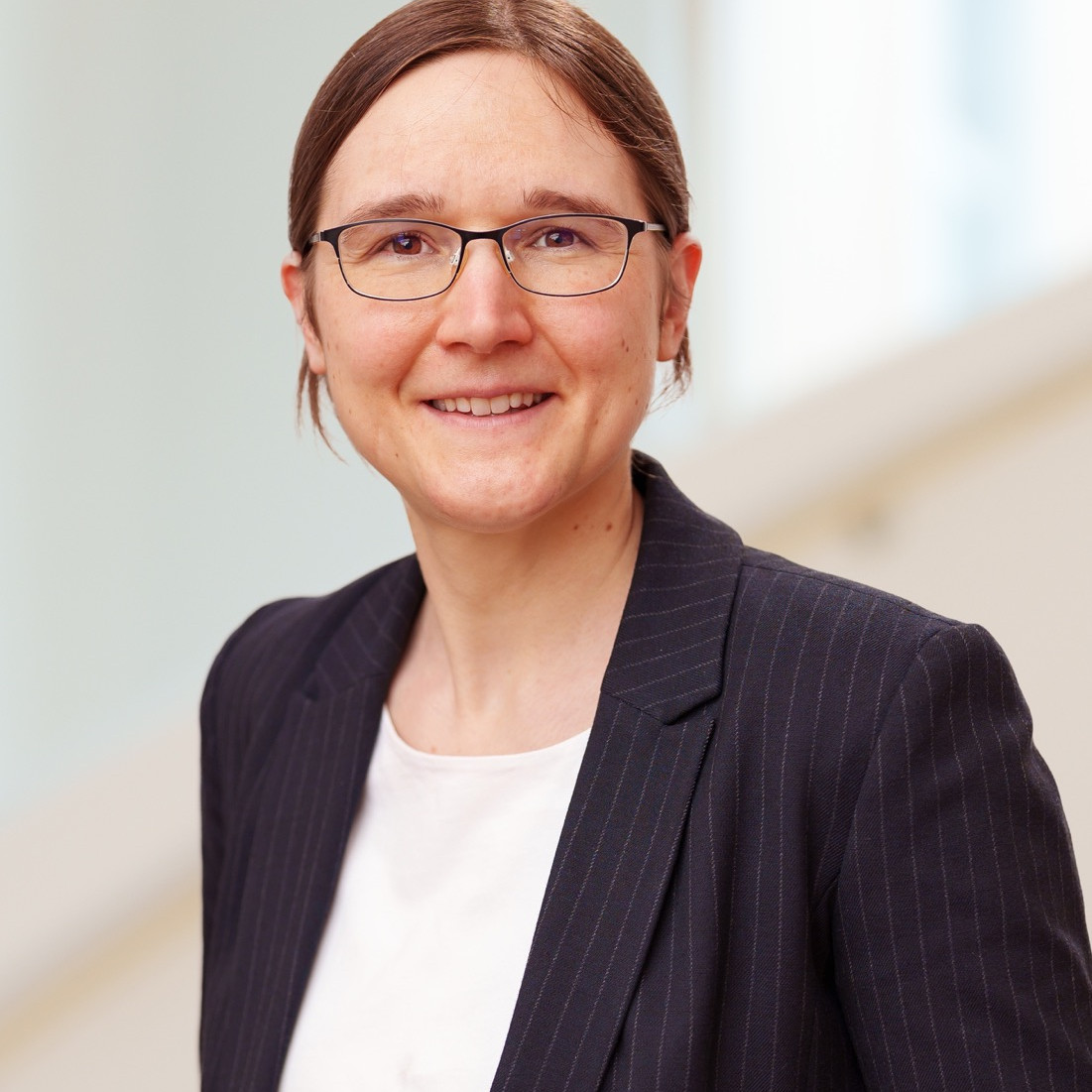
What determines whether a research project is considered ‘good’? What role do criteria, experience and expert judgement play in the evaluation process? And how can quality be assessed when, by definition, the results are still open to question? Since 2010, Prof. Florian Greten has reviewed 69 funding applications for the Wilhelm Sander Foundation. Prof. Christine Engeland has been working as a reviewer since 2018 and has assessed 14 applications since then. Both are familiar with the peer-review process from different academic contexts and understand just how much research depends on careful, fair decisions.
Greten, an internationally renowned cancer researcher at the Georg Speyer House in Frankfurt, has been active in national and European evaluation committees for many years. Engeland, a bioscientist at the University of Leipzig, conducts research into immunotherapies for cancer. Both regularly find themselves on both sides of the system – as applicants and as reviewers. In the Foundation’s anniversary year, they discuss in a joint interview the logic of evaluation, the management of risk, changing requirements for data and methods, and what they actually expect from applicants.
How can you tell if an application is really good?
CE For me, the work programme is the key focus. I read it very carefully: Is it clearly worded? Is it structured logically? Is it planned realistically? You can recognise a good project by the fact that the individual steps build on one another in a clear and logical manner and flow naturally from the problem statement. Whilst reading, I always ask myself: As an outsider, would I understand why exactly this next step follows? Have checks and balances been considered? Is it clear that potential problems have been thought through? When I realise that someone has not just formulated an idea, but has thought it through methodically and thoroughly, that’s what convinces me.
FG I tend to start with the broader context. Is the research question relevant to the field? Is it actually addressing an unresolved problem, or are we operating in an area where new insights bring only minor progress? This can often be assessed relatively quickly, particularly if you’ve been following a specialist field for many years. I ask myself: if this project is successful – will it make a difference? Will it advance our understanding?
What is non-negotiable for you?
FG A clear question. If you can’t explain the project in two or three sentences, it often lacks focus. And it must be realistic. Ambition is important – but it must be appropriate for the funding period.
CE I pay particular attention to the foundations: has thorough groundwork been carried out? Has it been methodically and carefully thought through? And, of course, ethical standards must be upheld. That goes without saying.
Research is always uncertain. How much risk is acceptable?
FG There can be no new knowledge without risk. By definition, research means that the outcome is open. What matters, therefore, is not whether a project is risky, but the nature of that risk. If a research question is scientifically relevant and the outcome remains uncertain, that is entirely normal – that is precisely the point. I take a more critical view when fundamental methods have not yet been established or when key technical steps are based on unsubstantiated assumptions. In such cases, the risk shifts from the acquisition of knowledge to feasibility. And one must take the context into account. A two-year project cannot carry the same level of riskas a large-scale, long-term project. The funding period and the timeframe for results must be aligned.
CE For me, the key factor is how consciously risk is managed. Are the areas of uncertainty clearly identified? Have potential stumbling blocks been considered? And are there alternative strategies in place should a key approach fail? If someone writes: ‘This is very innovative and therefore risky’, that’s not enough for me. I want to see that this risk has been analysed and that thought has been given to about what will happen if Hypothesis A is not confirmed or Method B does not work. A project can be ambitious. But it should show that the person isn’t stumbling into the unknown, but is planning with their eyes wide open.
FG Exactly. Good research does not mean that everything is certain. But it shows that uncertainty is part of a well-thought-out approach and does not arise from methodological ambiguity.
Why do proposals fail despite being based on a good idea?
CE If the underlying logic doesn’t hold up, it doesn’t convince me. However, this can often be improved. I have come across several cases where revised proposals were significantly stronger.
FG I often see two extremes: technically sound projects with little novelty value. Or very ambitious programmes that are hardly realistic to implement within the allotted time – particularly among younger researchers.
Has your view of applications changed in recent years?
FG Methodological capabilities have advanced significantly. In oncology, there is a growing demand to work with primary patient material. This influences what we now consider to be meaningful.
CE And large volumes of data are playing a greater role. Data management and data backup are being scrutinised more closely than before. However, the fundamental criteria have remained the same.
Can you feel the impact of artificial intelligence?
FG: With manuscripts, the linguistic impact is clearly noticeable. With funding applications, less so. A sound concept does not come about through a tool, but through thorough preparation.
CE Sometimes the state of research is presented in very polished language. For me, however, what matters is the underlying logic. Good language is no substitute for clear reasoning.
Why do you volunteer as assessors?
FG Because it is part of the system. Anyone who receives third-party funding themselves should also be prepared to review grant applications. Science cannot function without this principle of reciprocity. For me, taking part in this is not an additional task, but an integral part of academic work.
CE I see it in a similar light, but I also see it as an opportunity to shape things. As a reviewer, I can help decide which ideas are pursued and which research questions are given priority. You play a part in helping to shape academic developments. Of course, that is a responsibility. You have to weigh up arguments carefully and formulate criticism and express them transparently. But that is precisely where the appeal lies: not just conducting research, but helping to shape the framework conditions.
Fairness is a prerequisite here. Personal interests must not play a part. Proposals must not be assessed on the basis of personal preferences or strategic considerations. It is about the quality of the project – not about networks or competition.
What advice would you give to early-career researchers?
FG Don’t start too many projects at once. Especially at the beginning, there’s a strong temptation to take advantage of every funding opportunity, particularly if your first applications are successful. But every grant that’s approved comes with obligations: staff, experiments, reports, follow-up applications. All of this requires time and structure. If you start too many things at once, you risk getting bogged down. It is more sustainable to build up a few projects systematically, generate robust data and use this to develop a clear scientific approach.
CE Make sure to have your work proofread by experienced colleagues; ideally, also by people who do not work in the same specialist field. If someone outside your own professional circle can follow your line of reasoning, that’s a good sign. After all, reviewers do not always specialise in exactly the same subject area either. Furthermore, external feedback helps to identify blind spots: where has something been phrased too matter-of-factly? Where is a justification missing? A proposal is not just a scientific concept, but also an act of communication. And it improves when viewed from multiple perspectives.